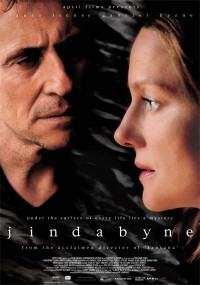
For whatever reason, there were probably many, I never did a review of Ray Lawrence’s
Jindabyne. I have mentioned on many occasions about how fond I was of it, and I wrote an appreciation of Deborra-Lee Furness’
startling performance. And I’m sitting here with nothing to do, but not enough time to do something bigger, so I figured I’d belt out a thousand words or so on it.
Jindabyne
Director: Ray Lawrence
I think to start I should mention Ray Lawrence’s 2001 film
Lantana. It was a film that I saw right as I was really getting into films as a lover of the art form and not just as something to do on a Friday or Saturday night. I was only 16 at the time, but I could recognise it as a strong and powerful film. It’s words and performances stung and have stayed with me to
this day. When Lawrence’s third film in 21 years was announced, I was thrilled. And thankfully watching
Jindabyne, based on Raymond Carver’s
So Much Water, So Close to Home (previously adapted by Robert Altman in
Short Cuts), it brought me back to that place. It’s a film based around words, small actions and characters. It’s not epic, it’s not reinventing the wheel. It’s just simple economic filmmaking at it’s best.
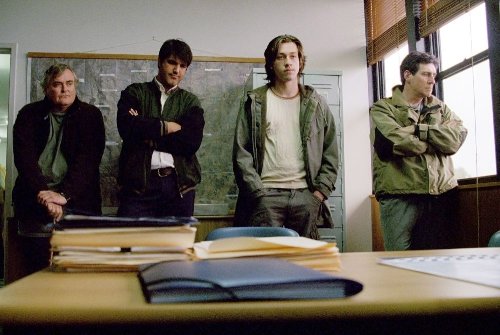
Jindabyne transports Carver’s story into the resort town of Jindabyne, New South Wales. Four men go on a fishing trip and upon their arrival discover the body of a young Aboriginal girl floating in the river. Instead of leaving and reporting it to the police, they tie her up with fishing wire and continue on their trip, only telling anybody about it until their return several days later. What follows is something that’s rare – dialogue driven thrills. Not thrills in the typical sense of James Bond or the like, no, but the thrills that come from watching brilliant actors reciting stunning dialogue and seeing images that just hit you in the gut.

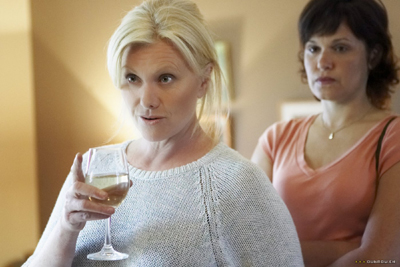
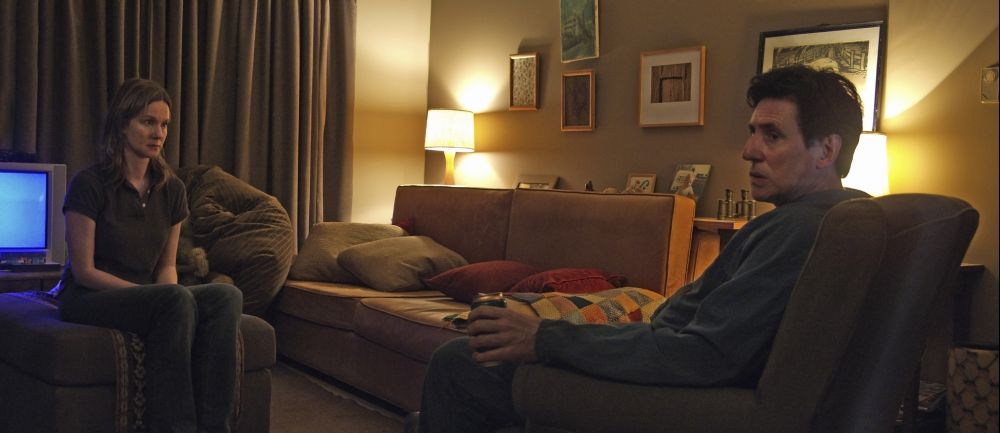
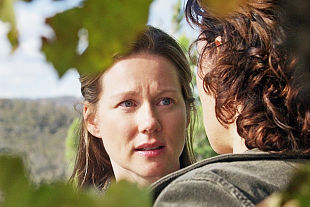
Gabriel Byrne and Laura Linney star as a couple living in the town of Jindabyne. She thinks she’s pregnant, but doesn’t want to be – she has a past that I’ll let you discover. He is the man who discovers the young girl’s body along with his mates. She can’t understand how she could hold her lifeless body and wrap fishing wire around her ankle, tie her to a tree and then keep on fishing. John Howard, Stelios Yiakmas and Simon Stone play the other three fishermen. Deborra-Lee Furness is Howard’s alcoholic and temperamental wife. A woman who takes care of her granddaughter after the death of the girl’s mother and a father who is never mentioned.
They all give great awards-worthy performances. Linney is superb, even if her strong American accent seems out of place at the start. She really gets into the role of Claire and it feels like one of those performances where the performer just instinctively knows their character inside and out. Byrne is an actor I have never been able to like, but here when he’s working in a modern setting and with the absence of the ability to go over the top, he is magic. His accent doesn’t sound strange though because Irish accepts are much more common here than American.

Furness, as I’ve mentioned before, is a firecracker in the role. Other roles are filled with class and esteem by people such as Leah Purcell and Alice Garner, with 10-year-old Eva Lazzaro shining brightest amongst them as the orphaned girl obsessed with death. Chris Haywood shows up at the start and at the end as the menacing Gregory and with nary a single word throughout the entire film, creates one of the villains of the year. Even Charles “Bud” Tingwell shows up for a brief scene.
Technically the film is tops too. Karl Sodersten’s smart and clean editing is never showy and treats the film’s subjects with the respect they deserve. Letting actors act with no frustrating cutting to pointless reaction shots. Paul Kelly and Dan Luscombe’s haunting score reminds of Kelly’s similar work on
Lantana, yet it feels singular, effective and setting-appropriate. David Williamson’s camerawork is a treat too. Constantly appearing as if his camera is static and still and only using natural light, he will ever so slightly zoom in or focus on something, giving it a dark sinister edge that I just loved.

But it is Beatrix Christian’s amazing screenplay adaptation that sits centre stage. Lawrence knows when to just let the words flow, and listening to the actors say this dialogue just makes me giddy. It makes me feel truly happy to see all these actors having such a perfectly rounded screenplay to work from. It feels entirely natural and with Lawrence’s abilities behind the camera (he often does only one take) it just feels right.
In the end,
Jindabyne works because all of these things click together perfectly in sync. It feels like a wholly formed film and not just an assemblage of good parts, which even some of the best films of the last few years have felt like. It’s a drama for adults who like to listen to actors recite well-written words for two hours. It asks questions but doesn’t expect you to answer them, so much as to acknowledge them (could the film’s townspeople’s near non-acknowledgement of the Aboriginals be a slight dig at the Australian government? That’s a big fat yes, if you ask me).
Jindabyne is a marvel. It’s also the best film of the year.
A